
Moissanite Cut: Complete Guide to Choosing the Perfect Facet Pattern


Key Takeaways
- Moissanite cut refers to the facet pattern and proportions that determine how light reflects through the stone, not the shape
- Round brilliant cut moissanite offers maximum sparkle with 57-58 facets and is the most popular choice for engagement rings
- Different cut styles include brilliant cuts (maximum fire), crushed ice cuts (diamond-like appearance), marquise cuts (distinctive elongated shape), and step cuts (elegant mirror-like shine)
- The cut quality directly impacts brilliance, fire, and overall appearance, making it crucial for maximizing moissanite’s natural beauty
- Hearts & Arrows and crushed ice cuts provide the most diamond-like appearance for those seeking traditional looks
The difference between a breathtaking moissanite and an ordinary stone often comes down to a single factor: the moissanite cut. While many shoppers focus on size and clarity when selecting moissanite stones for an engagement ring, the cut quality determines how brilliantly your center stone will sparkle and how it reflects light. Understanding moissanite cutting techniques empowers you to choose moissanite gemstones that maximize brilliance while offering an affordable alternative to diamonds without the hefty price tag.
This comprehensive guide explores everything from traditional round cut moissanite to modern crushed ice cuts, helping you create maximum brilliance in your perfect moissanite ring. Whether you’re drawn to the timeless elegance of an emerald cut or the brilliant sparkle of princess cut moissanite stones, understanding how different cuts affect light performance will save money while ensuring your high quality moissanite delivers exceptional beauty.
Understanding Moissanite Cut Quality
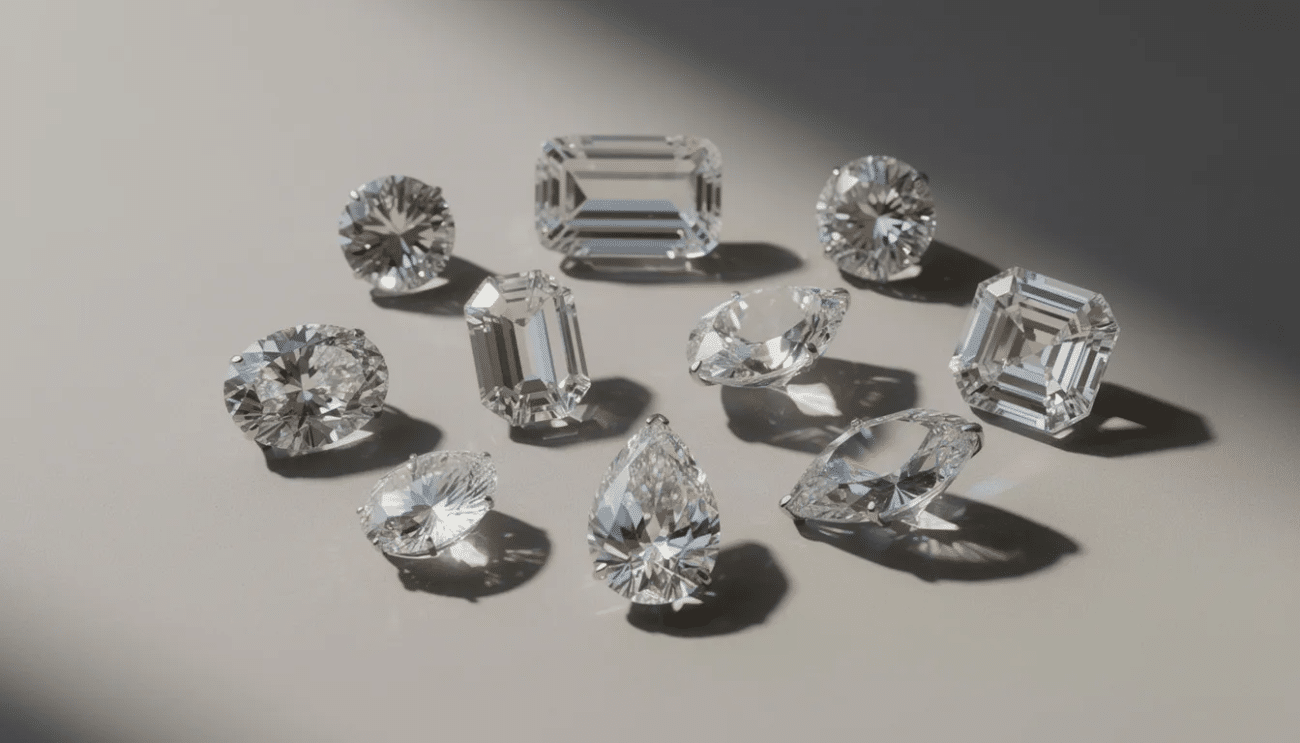
Moissanite cut quality encompasses the precise balance of proportion, symmetry, and polish that determines how effectively a stone performs with light. Unlike the geometric shape of the stone, cut refers to the technical execution of facet angles, depths, and surface finish that create maximum brilliance. When light enters a properly cut moissanite, it undergoes internal reflection and refraction before returning to your eye as brilliant sparkle and colorful fire.
Premium brands like Charles & Colvard employ master technicians who hand-cut each stone to optimize light performance. This meticulous approach ensures that lab created moissanite achieves its full potential for reflecting light, often outperforming poorly cut diamonds in terms of overall appearance. The precision required for excellent cut quality directly affects both the stone’s beauty and its value in the jewelry market.
Well-executed moissanite cuts harness the gemstone’s exceptional optical properties – including a refractive index of 2.65-2.69 compared to diamond’s 2.42 – to create brilliant sparkle that rivals or exceeds traditional diamond equivalent stones. The higher refractive index means moissanite bends light more dramatically, while its superior dispersion creates the colorful flashes of fire that make moissanite offers such captivating beauty in various lighting conditions.
Cut grade assessment considers three primary factors: proportion (depth and table percentages), symmetry (precision of facet alignment), and polish (surface smoothness). These elements work together to minimize light leakage while maximizing the return of white light and colorful fire to the viewer’s eye. A stone with excellent cut quality will display consistent brilliance across its entire surface with minimal dark areas or extinction patterns.
The manufacturing precision required for premium cut moissanite distinguishes high-quality stones from commercial-grade alternatives. Master cutters use advanced techniques to ensure each facet meets exact specifications, resulting in superior light performance that justifies the investment in quality moissanite over lower-grade alternatives that may appear dull despite their impressive size.
Popular Moissanite Cut Types
The moissanite market offers diverse cut styles, each designed to highlight different aspects of the gemstone’s exceptional optical properties. Understanding the characteristics of popular cuts helps shoppers select stones that align with their style preferences and jewelry design goals. From maximizing fire to creating diamond-like appearances, different cuts serve various aesthetic and practical purposes.
Market research indicates that certain cuts dominate consumer preferences, with brilliant cuts commanding the largest market share due to their exceptional sparkle. However, growing interest in unique and vintage-inspired designs has increased demand for alternative cuts that offer distinctive visual characteristics and timeless appeal.
The availability of different cuts varies among retailers and manufacturers, with some specializing in specific cutting styles. Premium brands typically offer the widest selection of cuts, while budget-oriented sellers may focus on the most popular shapes to maximize production efficiency. Understanding this market landscape helps shoppers identify the best sources for their preferred cut style.
Round Brilliant Cut
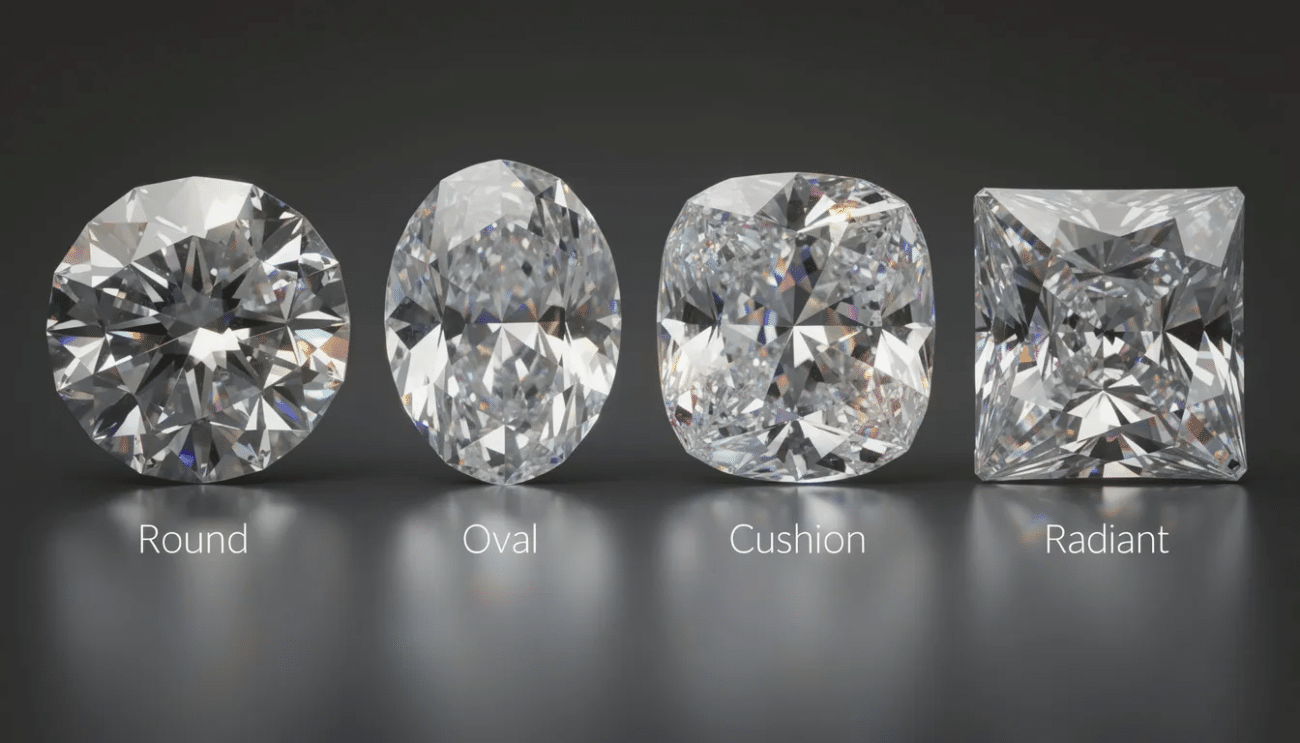
Round brilliant cut moissanite features 57-58 carefully calculated facets designed to create maximum brilliance, fire, and scintillation. This classic cut represents approximately 70% of moissanite engagement ring sales, making it the most popular choice among couples seeking timeless elegance. The mathematical precision of the round shape allows cutters to optimize facet angles for superior light performance while maintaining the familiar appearance consumers associate with traditional engagement rings.
The round cut’s popularity stems from its versatility and forgiving nature. Even stones with minor inclusions or slight color variations can appear stunning when properly cut, as the brilliant faceting pattern effectively masks visible flaws while amplifying the stone’s natural beauty. This makes round brilliant an excellent choice for shoppers prioritizing brilliance over absolute perfection in clarity or color grades.
From a practical standpoint, round cut moissanite pairs beautifully with virtually any setting style, from classic solitaire designs to elaborate halo arrangements. The symmetrical shape ensures balanced light return from all angles, creating consistent sparkle whether viewed straight-on or from the side. This reliability makes round brilliant the ideal choice for those seeking a perfect moissanite ring that will maintain its beauty across various lighting conditions.
The cutting process for round brilliant moissanite requires exceptional skill to achieve the precise crown and pavilion angles that optimize light return. When executed properly, this cut delivers the closest match to traditional diamond appearance while showcasing moissanite’s superior fire and brilliance. The result is a stone that combines familiar aesthetics with enhanced optical performance.
Princess Cut
Princess cut moissanite combines the brilliant sparkle of round cuts with a modern square shape that appeals to contemporary design preferences. This cut features sharp, clean lines and geometric precision that creates intense light reflection from each corner of the stone. The chevron facet pattern characteristic of princess cuts radiates light outward, producing brilliant fire and scintillation that rivals round brilliant performance.
The square shape of princess cut stones offers excellent value by maximizing visible surface area for any given carat weight. This efficiency means princess cut moissanite appears larger than round stones of equivalent weight, providing impressive visual impact while maintaining cost-effectiveness. The modern aesthetic appeals to couples seeking alternatives to traditional round cuts without sacrificing brilliance.
Princess cuts work particularly well in contemporary jewelry designs, especially when paired with sleek settings that emphasize the stone’s geometric lines. The sharp corners require protective prong placement to prevent chipping, but proper setting techniques ensure long-term durability. This cut is an excellent choice for those who appreciate modern elegance and want their ring to make a bold statement.
The faceting pattern in princess cut moissanite creates unique light patterns that distinguish it from other cuts. The interplay of brilliant facets produces intense sparkle while the square outline provides a distinctive silhouette that photographs beautifully. This combination makes princess cut an increasingly popular choice among style-conscious couples.
Oval Cut
Oval cut moissanite offers the brilliance of round cuts with an elongated shape that creates flattering visual effects on the finger. The elliptical outline provides greater finger coverage than round stones of similar carat weight, making the stone appear larger while offering excellent value. This classic shape has experienced renewed popularity as couples seek alternatives to traditional round cuts that still provide exceptional sparkle.
The faceting pattern in oval cuts closely mirrors that of round brilliant stones, typically featuring 56-58 facets arranged to maximize light return. However, the elongated shape can occasionally create a “bow-tie” effect – a dark area across the center of the stone visible in certain lighting conditions. High-quality oval cuts minimize this phenomenon through precise facet arrangement and proper proportions.
Oval moissanite excels at hiding inclusions due to its brilliant faceting pattern while offering versatility in setting styles. The shape works beautifully in solitaire settings, three-stone arrangements, and halo designs. The elongated form is particularly flattering on shorter fingers, creating an elegant, sophisticated appearance that photographs exceptionally well.
The cutting precision required for oval moissanite demands expert craftsmanship to achieve symmetrical proportions and optimal light performance. When properly executed, oval cuts deliver remarkable brilliance while offering a distinctive alternative to round shapes. This cut appeals to those seeking classic elegance with subtle uniqueness.
Emerald Cut
Emerald cut moissanite represents the epitome of sophisticated elegance through its step-cut faceting and rectangular geometric shape with truncated corners. Rather than maximizing fire like brilliant cuts, emerald cuts create a “hall of mirrors” effect through long, clean lines that emphasize transparency and clarity. This sophisticated appearance appeals to those who appreciate understated luxury and architectural precision in jewelry design.
The step-cut faceting pattern features fewer facets than brilliant cuts – typically 40-50 facets arranged in parallel rows. These large, open facets create dramatic flashes of light rather than the fine scintillation characteristic of brilliant cuts. The result is a more subdued but incredibly elegant sparkle that emphasizes the stone’s clarity and internal beauty rather than maximum fire.
Because emerald cuts have large, open facets that act like windows into the stone, they require higher clarity grades to achieve optimal beauty. Visible inclusions or color tints become more apparent in step cuts, making premium quality essential. However, when cut from high-grade moissanite, emerald cuts display breathtaking clarity and sophistication.
The rectangular outline and clean lines of emerald cuts pair beautifully with Art Deco-inspired settings and minimalist designs. This cut appeals to individuals who prefer refined elegance over maximum sparkle, creating rings with timeless appeal that will remain stylish across decades. The sophisticated appearance makes emerald cut ideal for those seeking distinctive beauty.
Moissanite Facet Patterns Explained
Understanding different faceting techniques reveals how cutters manipulate light to create distinct visual effects in moissanite stones. Each pattern serves specific aesthetic goals, from maximizing colorful fire to creating diamond-like appearances. The arrangement, size, and angles of facets determine how light enters, reflects internally, and exits the stone, directly affecting its overall appearance and appeal.
Advanced cutting techniques allow modern craftsmen to create patterns that optimize moissanite’s unique optical properties. Unlike diamonds, which are often cut to preserve carat weight, moissanite cutting prioritizes light performance, enabling more innovative facet arrangements that maximize the stone’s natural brilliance and fire.
Brilliant Cut Faceting
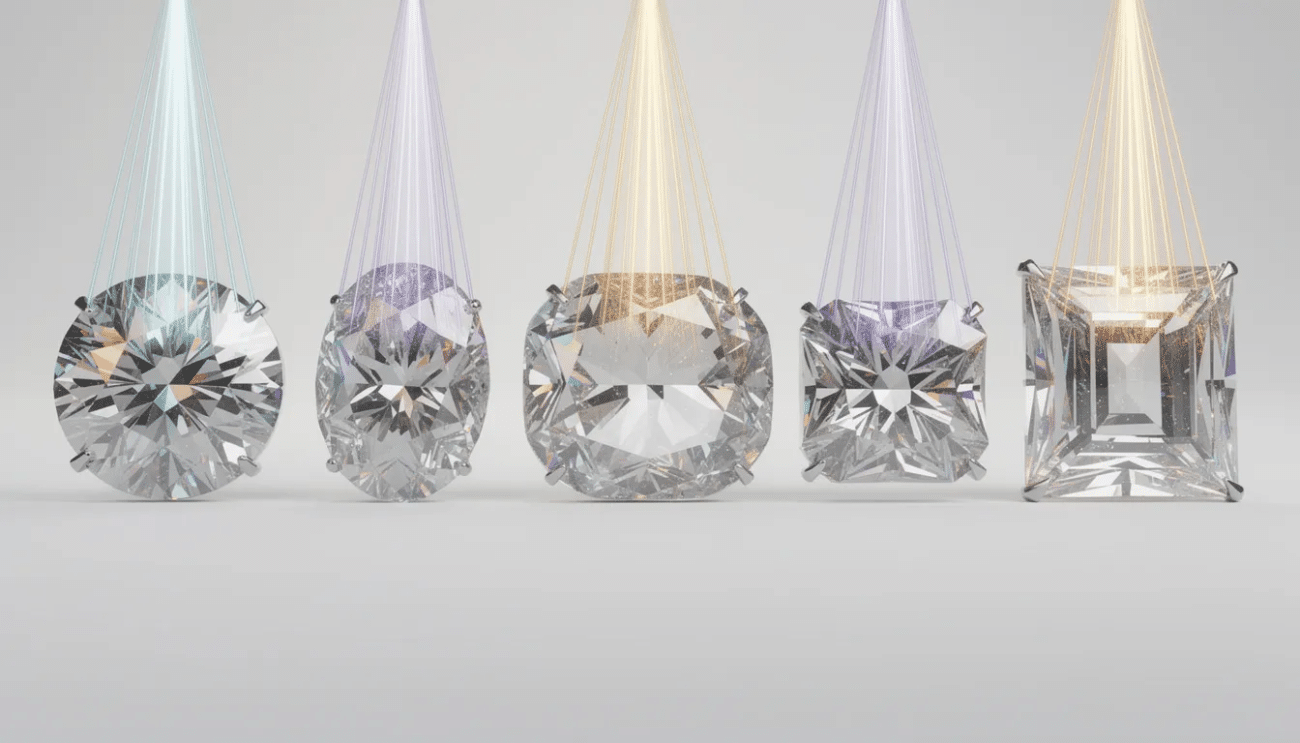
Brilliant cut faceting employs numerous triangular and kite-shaped facets arranged to maximize light reflection and refraction throughout the stone. This pattern creates the intense sparkle and colorful fire that makes moissanite such a captivating diamond alternative. The strategic placement of crown and pavilion facets ensures light entering the stone undergoes multiple internal reflections before returning to the viewer’s eye as brilliant white light and rainbow colors.
The standard brilliant cut pattern features carefully calculated crown angles (typically 34-35 degrees) and pavilion angles (usually 40.75-41 degrees) that optimize light return for moissanite’s specific refractive index. These precise angles ensure minimal light leakage while maximizing the stone’s natural ability to create fire – the colorful flashes that distinguish moissanite from other gemstones.
Brilliant faceting works exceptionally well in solitaire settings where the stone serves as the primary focal point. The intense sparkle draws attention and creates visual impact that rivals or exceeds traditional diamonds. This pattern is particularly effective in natural light, where the abundant illumination allows the facets to display their full range of brilliance and fire.
Modern variations of brilliant cutting include additional facets beyond the traditional 57-58, with some premium cuts featuring up to 64-69 facets. These enhanced patterns further increase scintillation while maintaining the classic brilliant appearance that consumers recognize and love.
Crushed Ice Pattern
Crushed ice cuts feature numerous small facets that create bright white sparkle with minimized rainbow colors, producing the most diamond-like appearance among all moissanite facet patterns. This innovative cutting style appeals to couples who want moissanite’s practical benefits – including its eco friendly nature and substantial cost savings – while maintaining a traditional diamond aesthetic in their engagement ring.
The crushed ice pattern achieves its distinctive appearance through strategic facet arrangement that emphasizes white light return over colorful fire. While moissanite naturally displays more fire than diamonds due to its higher dispersion, crushed ice cuts subdue this characteristic to create sparkle that closely mimics diamond behavior. This makes crushed ice an excellent choice for those seeking authenticity in appearance.
The numerous small facets in crushed ice patterns create exceptional brilliance in various lighting conditions. Unlike traditional brilliant cuts that may appear less impressive in dim lighting, crushed ice maintains consistent sparkle across diverse environments. This reliability makes it practical for daily wear while ensuring the ring always looks stunning.
Quality crushed ice cuts require exceptional precision to achieve the proper balance of facet sizes and angles. When executed expertly, this pattern delivers remarkable beauty that satisfies those who want moissanite’s benefits without its distinctive fire signature. The result is a stone that performs like a premium diamond while offering superior value.
Hearts & Arrows Cut
Hearts & Arrows cutting represents the pinnacle of precision in round moissanite faceting, where perfect symmetry creates distinctive patterns visible through specialized viewers. When viewed through the crown (top), the stone displays eight symmetrical arrows, while the pavilion (bottom) reveals eight perfect hearts. This optical phenomenon occurs only when cutting precision reaches the highest standards of craftsmanship.
The Hearts & Arrows pattern indicates exceptional symmetry, proportion, and polish – the three factors that determine cut quality. Achieving this level of precision requires master cutting techniques and results in superior light performance compared to standard brilliant cuts. The perfect alignment of facets creates optimal light reflection and minimal light leakage, producing maximum brilliance and fire.
Hearts & Arrows moissanite commands premium pricing due to the exceptional skill and time required for cutting. The precision necessary to achieve perfect symmetry results in higher material waste during cutting, contributing to increased costs. However, the superior optical performance and prestige associated with Hearts & Arrows cutting justify the investment for discerning buyers.
This cutting style is available primarily in round shapes, though some cutters offer Hearts & Arrows variations in fancy shapes. The pattern serves as a quality guarantee, providing visible proof of cutting excellence that ensures optimal light performance throughout the stone’s lifetime.
Antique and Vintage Cuts
Antique cutting styles offer romantic, vintage appeal through facet patterns that create softer light effects compared to modern brilliant cuts. These traditional techniques, including the old european cut and rose cut variations, produce larger facets that create gentle, pastel rainbow colors rather than intense fire. This subdued brilliance appeals to those seeking historical authenticity or romantic vintage aesthetics.
The old european cut features a smaller table, higher crown, and larger culet compared to modern brilliant cuts. These proportions create a distinctive “chunky” sparkle with broad flashes of light rather than fine scintillation. When executed in moissanite, this cut produces beautiful pastel fire that complements vintage and antique jewelry settings perfectly.
Rose cuts display a flat base with a faceted dome resembling rose petals, creating subtle brilliance that emphasizes the stone’s transparency. While less brilliant than modern cuts, rose cuts offer historical charm and work beautifully in period-accurate reproduction jewelry. The gentle light play appeals to those who appreciate understated elegance.
These vintage cutting styles require specialized expertise and are typically available from craftsmen who specialize in antique reproductions. The resulting stones offer unique character that distinguishes them from modern cuts while providing the durability and affordability advantages of lab-created moissanite.
Choosing the Right Moissanite Cut
Selecting the ideal moissanite cut involves balancing personal style preferences, practical considerations, and the specific characteristics you most value in a gemstone. Consider whether you prefer maximum sparkle and fire or elegant sophistication, as different cuts excel in different areas. Your lifestyle, finger shape, and the ring’s intended setting style all influence which cut will provide the most satisfying long-term ownership experience.
Personal style plays the primary role in cut selection. Those drawn to classic, timeless designs typically gravitate toward round brilliant or emerald cuts, while individuals with contemporary tastes often prefer princess or radiant cuts. Consider how the ring will coordinate with your existing jewelry collection and whether you want it to make a bold statement or provide elegant versatility.
Finger shape and size significantly impact how different cuts appear when worn. Elongated shapes like oval and emerald cuts can make shorter fingers appear longer and more slender, while round cuts provide balanced proportions on all finger types. Consider trying on different cut styles to see how they complement your hand’s natural proportions and personal aesthetic preferences.
The setting style you envision also influences cut selection. Solitaire settings showcase the stone as the primary focal point, making cut quality paramount. Halo settings can enhance smaller stones or add additional sparkle to step cuts. Three-stone designs work well with matched cuts or complementary shapes that create visual harmony throughout the ring.
Consider the lighting conditions where you’ll most frequently wear the ring. If you spend significant time in office environments with fluorescent lighting, brilliant cuts maintain their sparkle better than step cuts. For those frequently in natural light, all cuts perform well, allowing greater flexibility in selection based purely on aesthetic preferences.
Budget considerations may also influence cut selection, as some styles command premium pricing due to cutting complexity or material waste during manufacturing. Princess cuts typically offer excellent value by maximizing apparent size, while Hearts & Arrows commands higher prices for precision cutting. Balance your budget against the visual impact and personal satisfaction different cuts provide.
Cut Quality and Grading Standards
Professional grading organizations, including GIA and IGI, assess moissanite cut quality using established criteria that evaluate proportion, symmetry, and polish. These standardized assessments provide consumers with reliable indicators of cutting excellence, helping ensure they receive stones that meet professional quality standards. Understanding these grading factors enables informed comparisons between different stones and suppliers.
Proportion refers to the mathematical relationships between various stone dimensions, including depth percentage, table percentage, crown angle, and pavilion angle. Optimal proportions vary by cut style but generally aim to maximize light return while maintaining structural integrity. Stones with ideal proportions display superior brilliance and fire compared to those with suboptimal dimensions.
Symmetry assessment examines how precisely facets align and how well the stone’s overall shape maintains geometric accuracy. Perfect symmetry ensures uniform light reflection across the stone’s surface, while poor symmetry creates uneven brightness patterns and reduces overall beauty. Professional grading identifies symmetry variations that may not be visible to untrained observers but significantly impact performance.
Polish quality affects the stone’s surface luster and clarity of facet reflections. Excellent polish creates mirror-like facet surfaces that maximize light transmission and reflection, while poor polish causes surface scattering that dulls the stone’s appearance. High-quality moissanite should exhibit excellent polish that enhances its natural optical properties.
Premium cut grades (Excellent or Ideal) command higher prices due to the precision required and material waste involved in achieving optimal proportions. Commercial grade cuts may offer acceptable appearance at reduced prices but typically don’t achieve the maximum light performance possible with precision cutting. The investment in premium cut quality pays dividends in superior beauty and long-term satisfaction.
Hand-cut stones by master technicians often exceed machine-cut alternatives in precision and attention to detail. While more expensive, hand-cutting allows for optimization of each individual stone’s potential rather than applying standardized cutting parameters. This personalized approach typically results in superior light performance and exceptional beauty.
Frequently Asked Questions
Which moissanite cut looks most like a diamond? Hearts & Arrows round cuts and crushed ice patterns provide the closest diamond appearance among all moissanite cuts. Crushed ice patterns specifically minimize moissanite’s characteristic fire while maximizing white light return, creating sparkle that closely mimics diamond behavior. Hearts & Arrows cuts deliver superior brilliance and precision while maintaining the familiar round brilliant appearance most associated with traditional diamond engagement rings.
Do different moissanite cuts affect the stone’s durability? Cut style doesn’t significantly impact moissanite’s inherent durability, as the material maintains its 9.25 Mohs hardness rating regardless of faceting pattern. However, cuts with pointed corners like princess or marquise shapes may be slightly more vulnerable to chipping if struck directly on the points. Step cuts with fewer, larger facets may be marginally more resistant to damage than brilliant cuts with numerous small facets, but proper setting protection minimizes these concerns across all cut styles.
Why do some moissanite cuts cost more than others? Premium cuts like Hearts & Arrows require exceptional precision and master cutting techniques, resulting in higher labor costs and increased material waste during manufacturing. Hand-cut stones by expert craftsmen command premium pricing compared to machine-cut alternatives. Additionally, certain cuts may be less popular or require specialized equipment, affecting production costs and market pricing. The complexity of achieving optimal proportions and the skill level required directly influence the final cost of different cut styles.
Can moissanite cuts be recut or modified after purchase? While technically possible, recutting moissanite is generally not recommended as it significantly reduces carat weight and may not improve the stone’s appearance. The precision required for optimal light performance means that modifying existing cuts often compromises the mathematical relationships between facets. Replacement with a properly cut stone typically proves more cost-effective than attempting modification. If considering changes, consult with experienced gemstone cutters who can assess whether improvement is possible given the stone’s current proportions.
How do I know if my moissanite has a quality cut? Quality cuts display excellent symmetry with no visible misalignment of facets, proper proportions that prevent light leakage from the bottom or sides, and consistent sparkle across the entire stone surface under various lighting conditions. Look for minimal dark areas or extinction patterns when viewing the stone directly. Professional certification from recognized grading organizations provides objective assessment of cut quality. Additionally, reputable suppliers should provide detailed specifications including depth percentage, table percentage, and symmetry grades that indicate cutting precision.